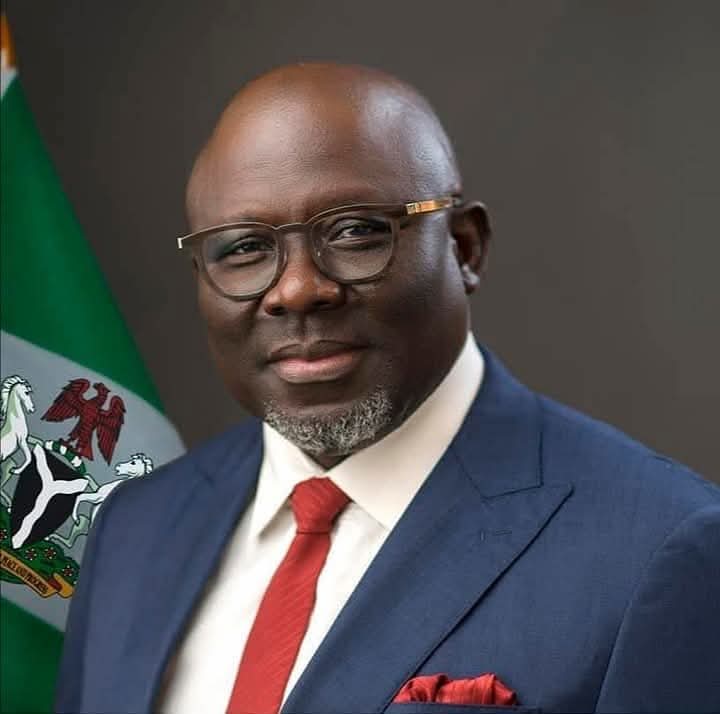
Oborevwori backs Tinubu’s reforms, calls for national dialogue

Governor of Delta State, Sheriff Oborevwori, has declared that Nigeria’s economy is rebounding, crediting the recovery to bold reforms by President Bola Tinubu, while proposing the institutionalisation of a periodic national conference to strengthen inclusive governance and national unity.
Oborevwori spoke while delivering the Centennial Ceremony Lecture of the Yoruba Tennis Club, titled “Inclusive Governance and National Unity: Lessons from Delta State for a more united Nigeria,” at the Club House at Onikan, Lagos, on Wednesday.
Oborevwori argued that the removal of fuel subsidy and the floating of the naira, though initially painful, were critical decisions that had begun to yield positive outcomes.
He said, “We are seeing a good example of that in President Bola Ahmed Tinubu, a bold and courageous leader who has demonstrated the political will that is needed to put Nigeria on the path of economic recovery, growth, and stability.
“The removal of fuel subsidy and the floating of the naira in the foreign exchange market were two tough decisions necessary to jump-start the economy.
“After the initial hiccups of his macroeconomic stabilisation programmes, I can say without any fear of contradiction that the economy is on the rebound.”
The governor added that the reforms have improved revenue flows to subnational governments, enabling them to execute development projects.
“Our achievements in Delta State can be traced to the ongoing reforms of the Federal Government; now, states and local governments have more money in their coffers and can execute programmes and projects that foster inclusive economic growth and sustainable development.
“A few years ago, government at all levels could barely pay staff salaries, let alone invest in capital projects. But today we are seeing local government councils embarking on critical infrastructure projects,” he said.
Speaking on the importance of inclusive governance, Oborevwori proposed the institutionalisation of a national conference to be held every 10 years to strengthen governance and unity.
He said such a conference should be structured rather than a national dialogue being treated as an ad hoc response to a crisis.
Oborevwori said, “It is my considered view that one of the most practical pathways towards achieving inclusive governance and strengthening national unity in Nigeria is the institutionalisation of a periodic national conference of stakeholders.”
He recommended that the conference should be supported by an independent secretariat and backed by legislation to ensure implementation of resolutions.
“Nigeria must embed structured, recurring engagement into its governance architecture,” he said.
Oborevwori set out an expansive case for inclusive governance as Nigeria’s most viable pathway to unity, arguing that structured national dialogue must replace crisis-driven engagement.
The governor outlined that the proposed conference should bring together federal and state actors, traditional rulers, the private sector, civil society groups, youth and women organisations, with a focus on reviewing national priorities and promoting inclusivity.
He stressed that such engagement should not be reactive but embedded in governance.
“By institutionalising this periodic national conference and implementation structure, we can move from reactive governance to proactive nation-building,” he said.
Oborevwori emphasised that inclusive governance remains central to national cohesion.
He described inclusive governance as a system that ensures representation, participation, and fairness across all segments of society, particularly the vulnerable.
He also called for a rejig of the National Youth Service Corps programme and national curriculum to propagate the nation’s history, culture and values.
He said, “It is imperative for us as a nation to continue to invest in initiatives that are essential to cultivate and promote a collective identity.
“These should encompass a revitalised National Youth Service Programme authentically geared towards integration, as well as a national curriculum that imparts our shared history and values, particularly through the promotion of national symbols that inspire pride in our nation and stoke the fires of patriotism.”
Oborevwori also underscored the importance of leadership in driving unity, urging leaders to take difficult decisions in the overall interest of the country.
“A true leader must possess the will to take tough but necessary decisions that are good for the economy and the people, even if they may not appear to be so from the onset,” he said.
Drawing from Delta State’s experience, he pointed to his administration’s MORE Agenda — Meaningful Development, Opportunities for All, Realistic Reforms, and Enhanced Peace and Security — as a working model.
According to him, the approach has driven infrastructure expansion across ethnic lines, widened access to healthcare through a scheme enrolling over 2.7 million residents, and delivered empowerment programmes reaching more than 300,000 people.
He emphasised that development must be geographically balanced, noting that infrastructure such as the Effurun-Warri flyovers and Ughelli-Asaba road dualisation were designed to integrate communities rather than serve sectional interests.
In healthcare, he cited the distribution of MRI machines, dialysis units and diagnostic facilities across senatorial districts as part of an equity-driven strategy.
He stressed that deliberate efforts to build a shared national identity, stressing the role of media, education and policy in promoting unity.
Citing CNN as an example, he urged the Nigerian media to push out only positive narratives of the country.
“Nation building does not happen by chance; we must take intentional, deliberate, and sustained steps to make it happen,” he said.
The lecture also highlighted Delta’s engagement with non-indigenes, which he said had strengthened social integration, citing a 2025 recognition by diverse ethnic communities in the state as evidence of inclusive policy in practice.
Earlier, Lagos State Governor Babajide Sanwo-Olu described the club’s centenary as a milestone in Nigeria’s civic history, commending its role in shaping national discourse and leadership culture.
Chairman of the club, Olawumi Gasper, said the anniversary was both reflective and forward-looking, reaffirming the institution’s commitment to convening conversations on governance and national development.
The event was well attended by elites in the Yoruba Tennis Club, including Prof Adetokunbo Fabanwo, Dr Femi Okunu, Oluyomi Abayomi, Bolaji Cole, Olusegun Peter, as well as members and entourage of Oborevwori’s team.
Founded in 1926, the Yoruba Tennis Club has long served as a forum for elite policy dialogue, and Wednesday’s lecture reinforced its legacy as a platform where ideas about Nigeria’s political future are contested and refined.